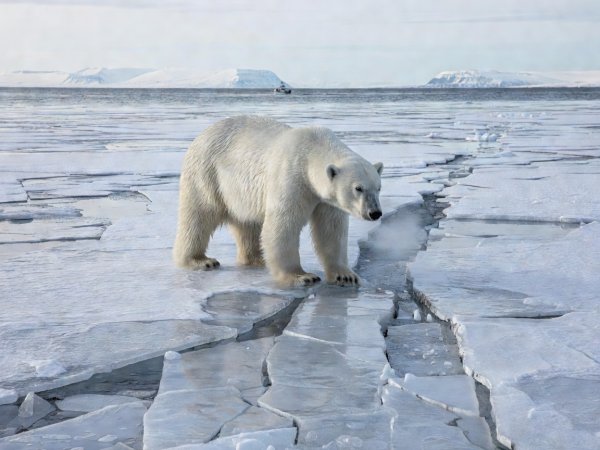
 Apex hunter
Polar bear
A marine mammal that hunts seals from the sea ice. Sightings usually come from ships along the ice edge, not from land.
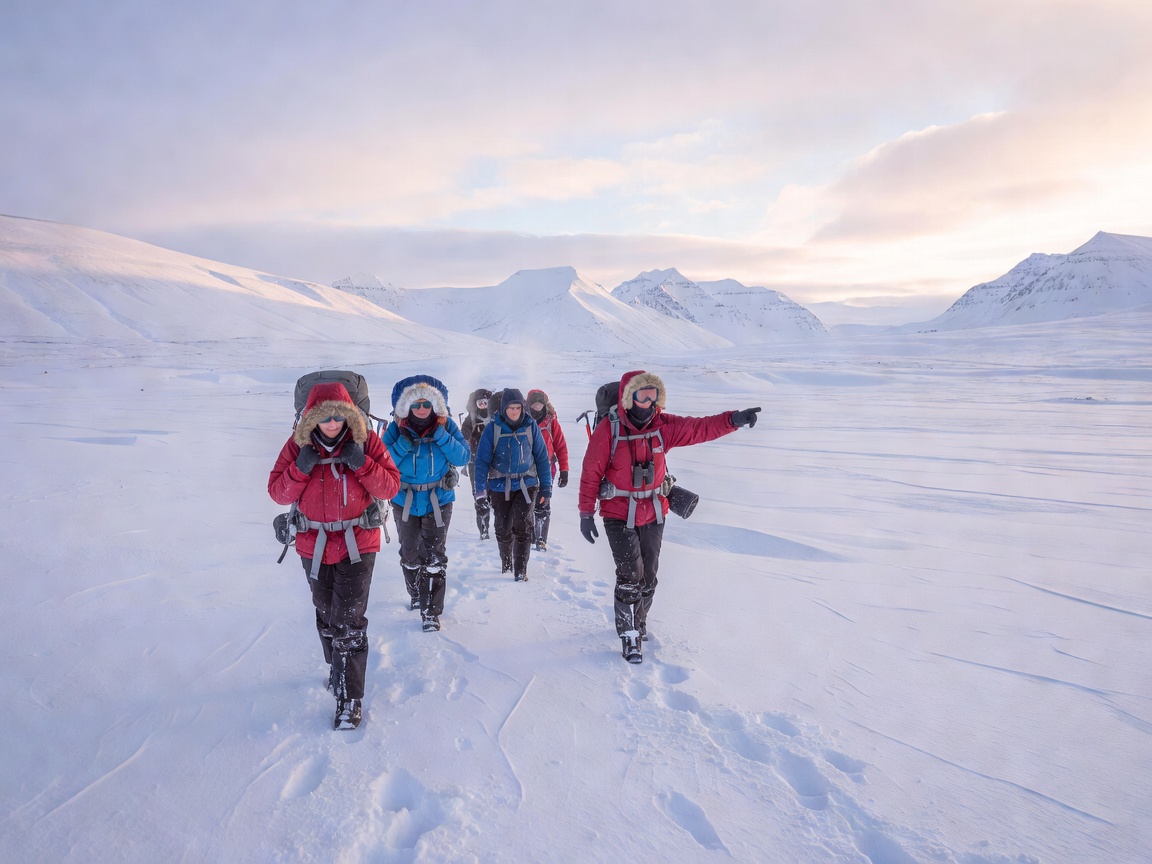
78° North · Svalbard
Step off the plane in Longyearbyen and the road network runs out almost as soon as it begins. A few kilometres of tarmac link the airport, the town and the old mining valleys; beyond that, people move by snowmobile in winter, by boat in summer and on skis or foot whenever the weather allows. The Barents Sea polar bear population is counted in the thousands, and the bears do not stay politely outside town limits.
That shapes everything about a visit. Outside the settlements, the Governor of Svalbard expects every group to carry suitable means of protection against polar bears, which is why most travellers join licensed guides rather than wander alone. Students at the University Centre in Svalbard (UNIS) learn rifle handling before fieldwork, and the Svalbard Museum explains how trappers, miners and scientists have lived with that risk for more than a century.
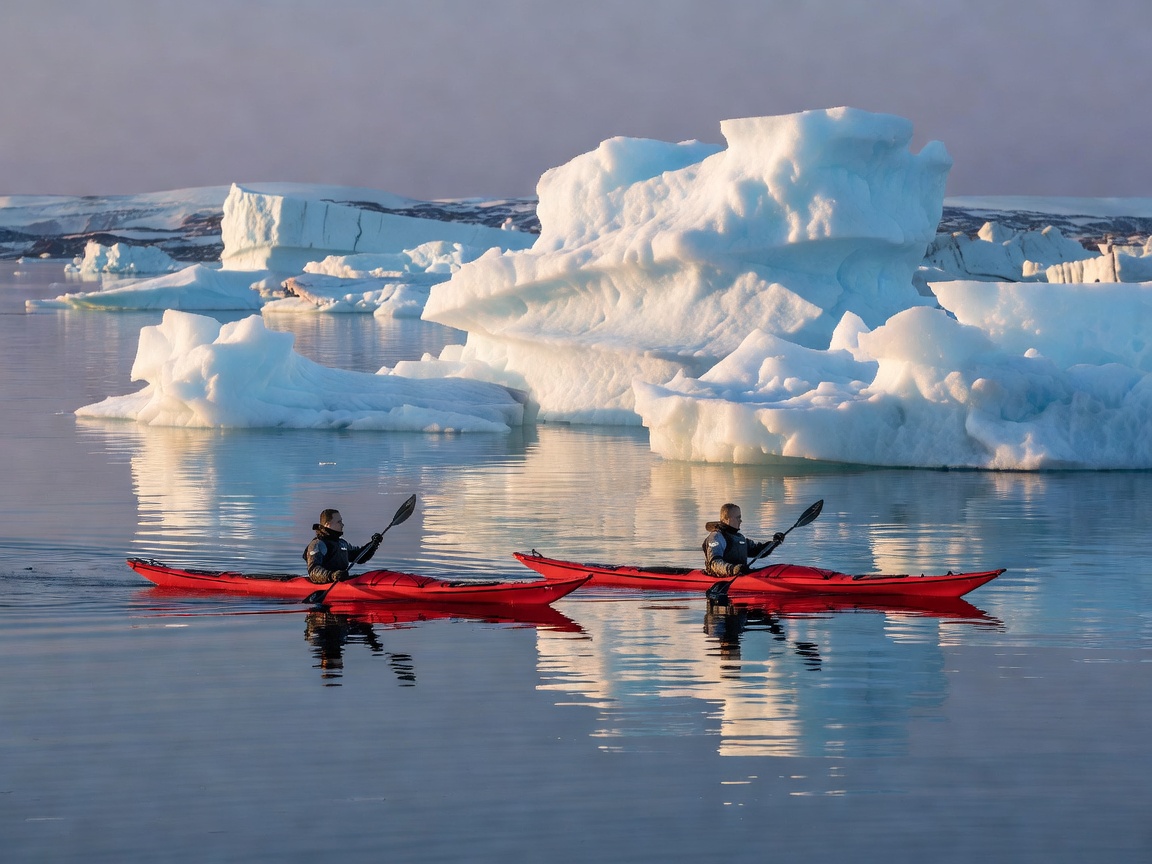
69° North · West Greenland
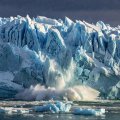
Ilulissat means "icebergs" in Greenlandic, and the name undersells it. At the head of the Ilulissat Icefjord sits Sermeq Kujalleq, also known as Jakobshavn Isbræ, one of the fastest-flowing and most productive glaciers on Earth. It pushes a jammed procession of icebergs towards Disko Bay, some of them as tall as city towers above the waterline.
UNESCO inscribed the Ilulissat Icefjord on the World Heritage List in 2004, citing both its beauty and its value to glaciology. Visitors walk the boardwalk trail to Sermermiut, an abandoned settlement site used for thousands of years, or watch the ice from the Icefjord Centre at the edge of town. The polar explorer Knud Rasmussen was born here, and his childhood home is now a museum.
Watched from a respectful distance
Four species most travellers hope to see, and the reasons a good guide keeps you well back from every one of them.
Apex hunterA marine mammal that hunts seals from the sea ice. Sightings usually come from ships along the ice edge, not from land.
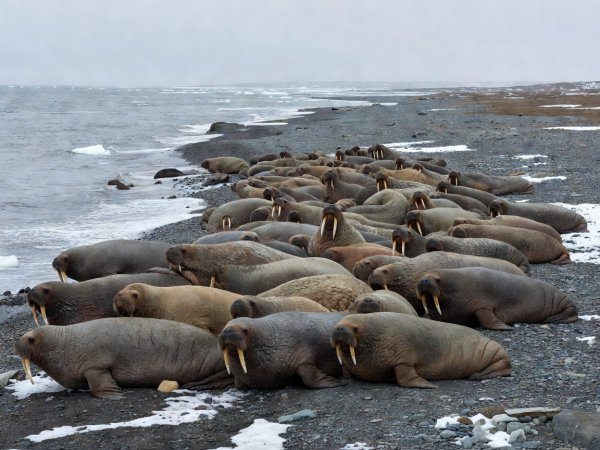 Haul-out giant
Hauls out on beaches in tight groups. Quiet, slow, downwind approaches keep them resting rather than stampeding into the sea.
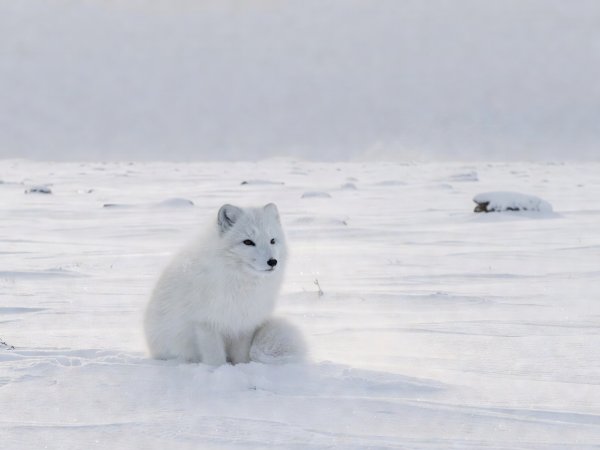 Tundra scout
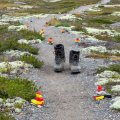
Turns white in winter and brown-grey in summer, scavenging behind bears and raiding bird cliffs below the nesting ledges.
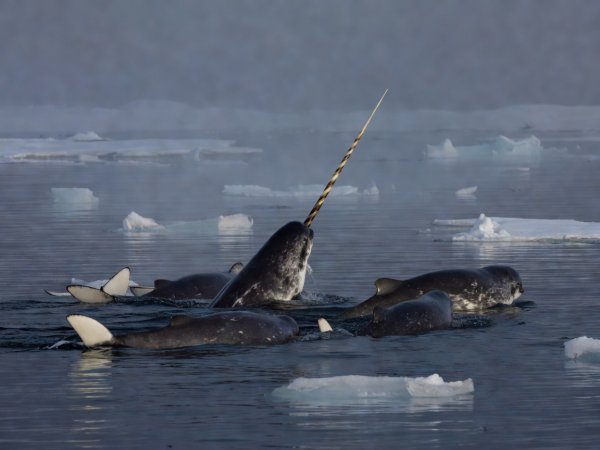 Deep diver
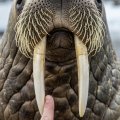
The tusked whale of Greenland and Arctic Canada, diving deep beneath winter sea ice and rarely seen close to boats.
Oslo · Bygdøy peninsula
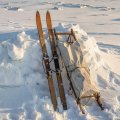
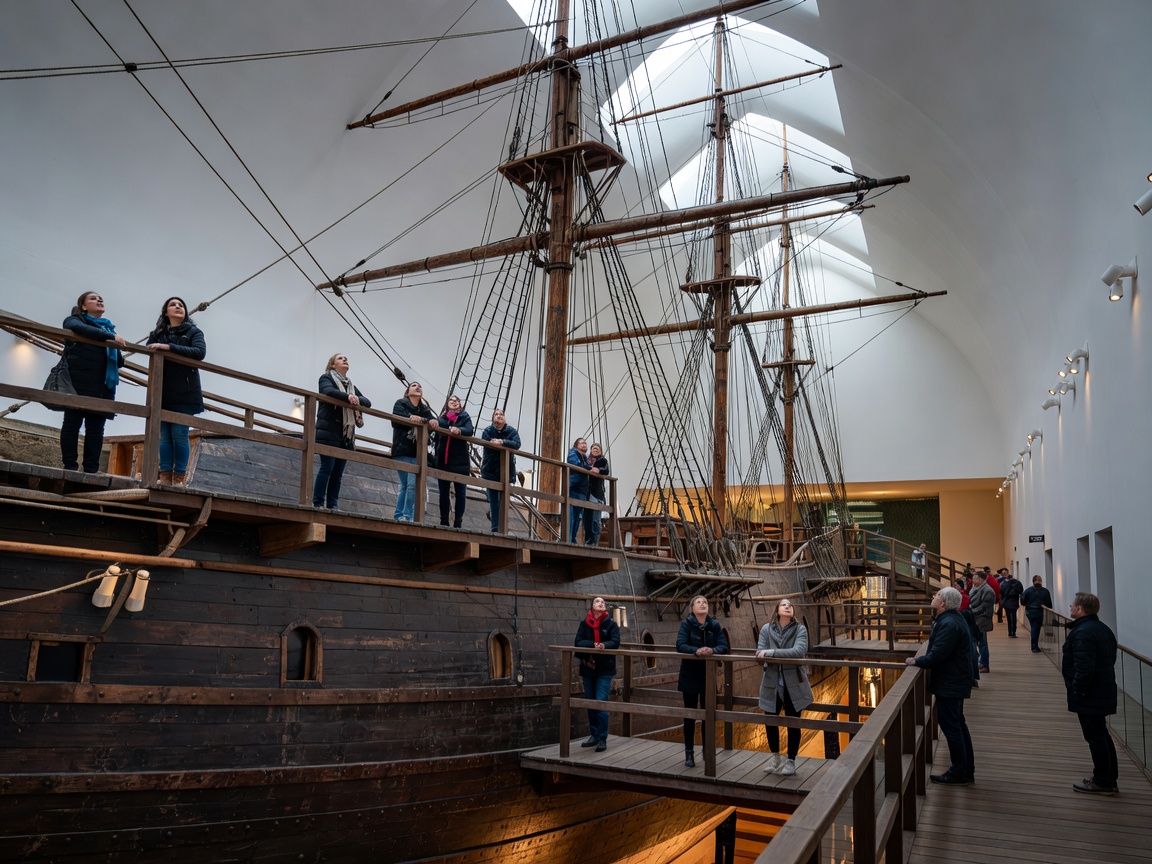
In 1893 Fridtjof Nansen sailed the Fram into the pack ice on purpose, betting that the drifting ice would carry his rounded hull across the Arctic Ocean. The ship survived three years in the ice, and Nansen and Hjalmar Johansen skied to a record farthest north of 86°14′ in 1895. Roald Amundsen later took the same ship south for his 1911 South Pole expedition.
Today you can walk the decks of the Fram inside the Fram Museum in Oslo, alongside Amundsen's Gjøa, the small sloop that completed the first transit of the Northwest Passage. It is the best place to understand how cramped, cold and inventive early polar travel was, and how much the explorers borrowed from Inuit clothing and dog-sledging techniques.
Four field-note chapters, each built around real places you can visit.
In Longyearbyen the sun stays up from roughly late April to late August. Aurora viewing needs darkness, so autumn, winter and early spring are the seasons for it.
Inside Longyearbyen, yes. Outside the settlement you need proper polar bear protection and the skills to use it, which is why most visitors book licensed guides.
Only with a qualified guide, crampons and rope. Crevasses can be hidden under snow bridges, and calving fronts are dangerous from both land and water.
We use cookies Some cookies are needed for the site to work. Others help us understand how it is used. You can change your choice later. Read more