From the Fram to Modern Polar Science
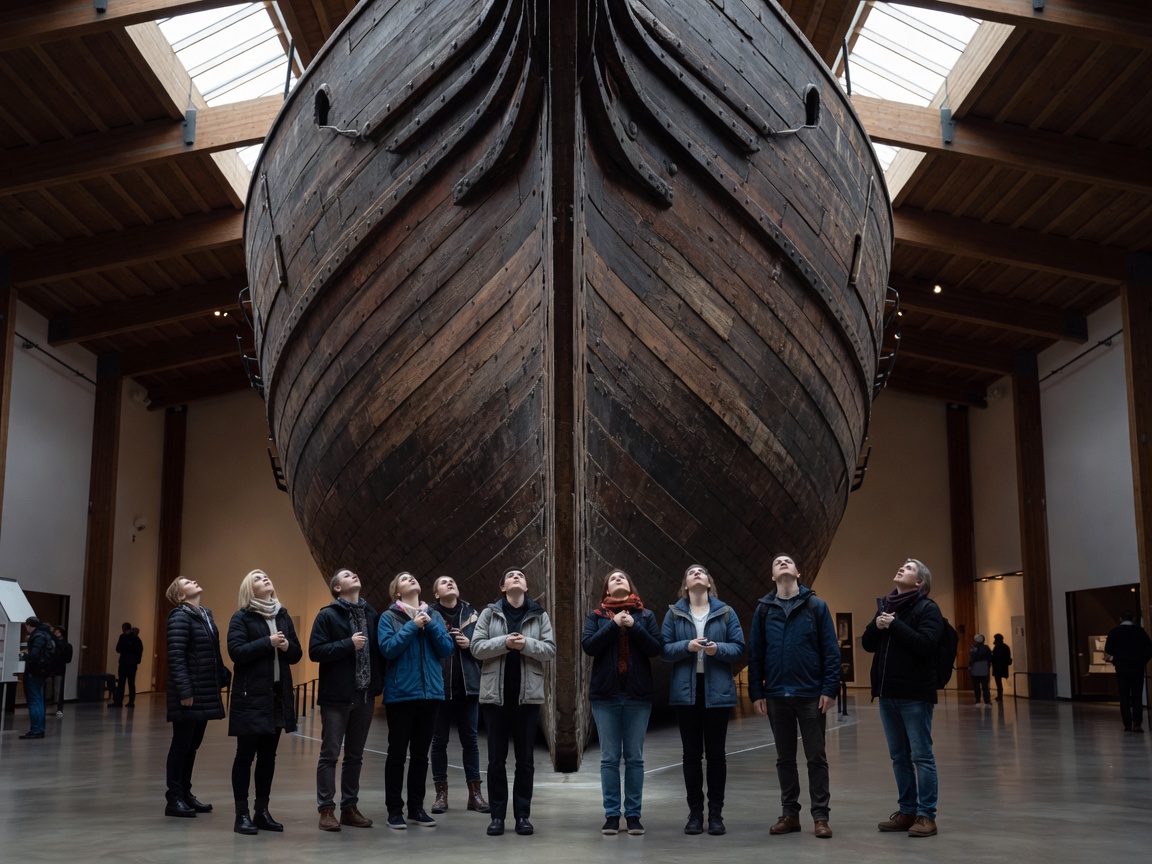
Field note · Fram Museum, Oslo
A Ship Built to Be Squeezed
Climb aboard the Fram at the Fram Museum on Oslo's Bygdøy peninsula and the first thing you notice is how thick everything is. Designed by shipbuilder Colin Archer for Fridtjof Nansen, the hull was rounded so that pressure from the pack ice would push the ship upwards instead of crushing it. Nansen's idea, drawn partly from wreckage of the lost Jeannette expedition that had drifted from Siberia to Greenland, was to freeze in deliberately and let the ocean's currents do the work.
Below deck, cabins are tiny and wood-panelled, the galley is cramped, and the saloon feels like a farmhouse kitchen afloat. It is easy to picture thirteen men passing three polar winters here, reading, playing music and taking scientific measurements that reshaped knowledge of the Arctic Ocean.
Explorer Timeline
Key moments from the Fram's departure to today's drifting research stations. Dates follow the published expedition records.
- 1893
The Fram sails into the ice
Nansen leaves Norway with Otto Sverdrup as captain, heading for the New Siberian Islands to freeze into the pack.
- 1895
Farthest north on skis
Nansen and Hjalmar Johansen leave the ship with dogs and kayaks, reaching 86°14′N before turning back and wintering in a stone hut on Franz Josef Land.
- 1896
A chance meeting and a safe return
The pair meet British explorer Frederick Jackson on Franz Josef Land. The Fram emerges from the ice near Svalbard the same summer, and the whole crew returns alive.
- 1903–1906
The Gjøa and the Northwest Passage
Roald Amundsen completes the first sea transit of the Northwest Passage. Wintering at what is now Gjoa Haven, his crew learns Netsilik Inuit skills in clothing, dog driving and travel.
- 1910–1912
The Fram goes south
Amundsen takes the Fram to Antarctica and reaches the South Pole in December 1911, applying Arctic methods of skis, dogs and fur clothing.
- 1921–1924
Fifth Thule Expedition
Ilulissat-born Knud Rasmussen, of Greenlandic and Danish heritage, travels by dog sledge from Greenland across Arctic North America, recording Inuit stories, songs and knowledge.
- 1922
Nansen's Nobel Peace Prize
Nansen is honoured for his humanitarian work with refugees and prisoners of war, including the "Nansen passport" for stateless people.
- 1926
The Norge over the Pole
The airship Norge, with Amundsen, Lincoln Ellsworth and Umberto Nobile aboard, lifts off from Ny-Ålesund in Svalbard and flies over the North Pole to Alaska.
- 1928
Amundsen lost at sea
Amundsen disappears in the Barents Sea while flying to search for survivors of Nobile's crashed airship Italia.
- 1968–1969
First surface crossing of the Arctic Ocean
Wally Herbert's British Trans-Arctic Expedition crosses from Alaska to Svalbard by dog sledge, passing the North Pole in April 1969.
- 2019–2020
MOSAiC: the Fram idea, modernised
The German research icebreaker Polarstern freezes into the ice for a year-long drift, hosting hundreds of scientists from many countries in the largest Arctic research expedition yet.
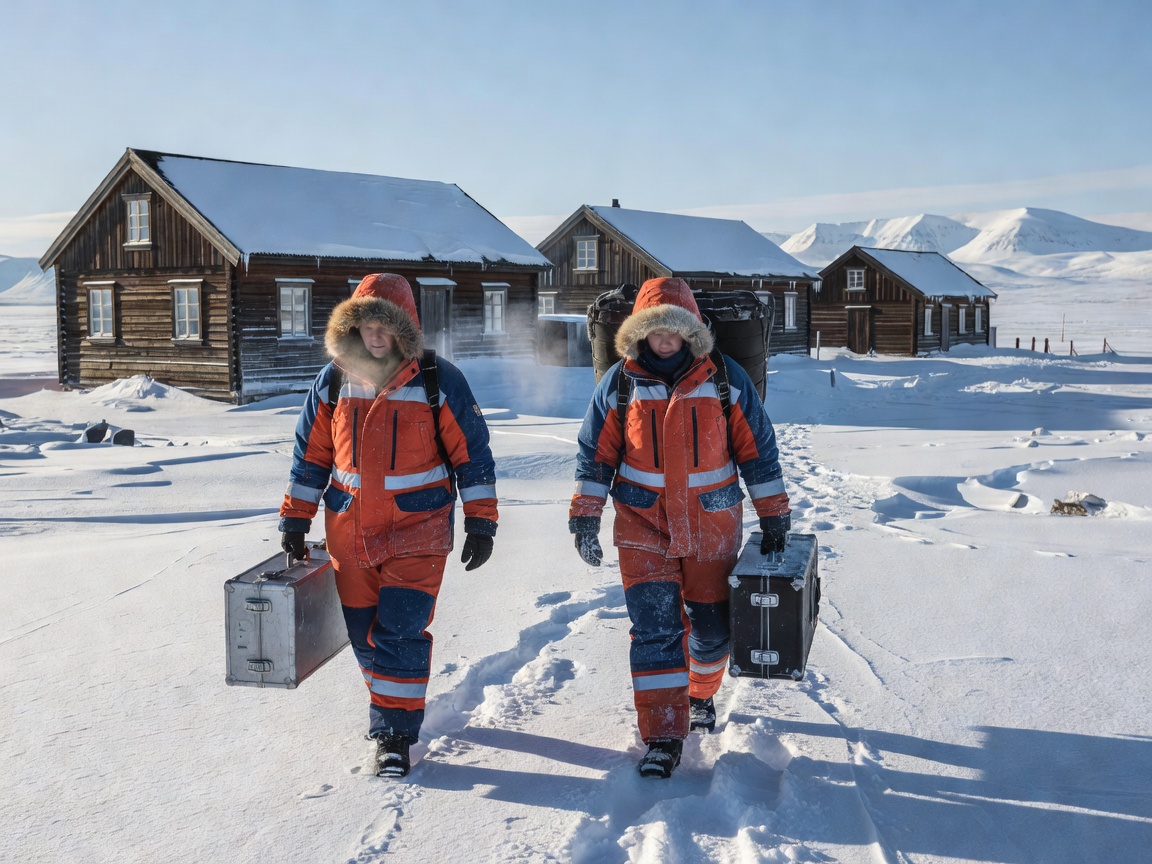
Field note · Ny-Ålesund, Svalbard
From Airship Mast to Research Village
Ny-Ålesund began as a coal-mining settlement and is now one of the northernmost permanently inhabited research communities in the world. The mooring mast used by the Norge and the Italia still stands at the edge of the village. Today research stations from countries including Norway, Germany, the United Kingdom, France, Italy, China, India and South Korea share the site, studying the atmosphere, glaciers and the fjord of Kongsfjorden.
Visitors usually arrive briefly by expedition ship. Radio silence rules protect sensitive instruments, so phones and Wi-Fi devices may need to be switched off, a small reminder that this is a working laboratory rather than a museum.
The People Behind the Famous Names
The heroic-age story is often told as a list of nations racing for flags. Read the expedition journals and a different picture appears. Amundsen credited what he learned from the Netsilik at Gjoa Haven for his later success in Antarctica. Robert Peary relied heavily on Inughuit hunters and on Matthew Henson, an African American expedition member whose role was long overlooked. Rasmussen's Fifth Thule Expedition was as much a work of ethnography as of travel, preserving accounts that Inuit communities still value.
Visiting the Arctic with that in mind changes how you look at places. In Greenland, settlements such as Ilulissat and Qaanaaq are home towns, not backdrops. In Svalbard, the remains of trappers' huts and whaling stations from the 17th century onward are protected cultural heritage; anything dating from before 1946 is automatically protected by law and must not be touched or moved.
Where to Follow the Story
- Fram Museum, Oslo — the Fram and the Gjøa, with exhibitions on Nansen, Amundsen and Sverdrup.
- Svalbard Museum, Longyearbyen — trapping, mining, whaling and scientific history of the archipelago.
- Knud Rasmussen's childhood home, Ilulissat — a small museum on the life of the Greenlandic explorer.
- Polar Museum, Tromsø — exhibitions on Arctic hunting, trapping and expeditions that set off from northern Norway.
Modern Polar Science in Plain Terms
The questions Nansen asked — which way the ice drifts, how deep the ocean is, how cold the air gets — are still being asked, now with satellites, buoys and autonomous instruments. The University Centre in Svalbard trains students in Arctic fieldwork each year, and the Norwegian Polar Institute runs long-term monitoring of sea ice, glaciers and wildlife. Many expedition ships now invite guest scientists aboard and collect citizen-science data such as cloud observations and seabird counts.
Further reading: Fram Museum (opens in new tab) · University Centre in Svalbard (opens in new tab) · MOSAiC Expedition (opens in new tab)
Next: how to follow in their footsteps without leaving a mark.